

Telehealth NP hiring slows at the state border, because no multistate license for nurse practitioners is active in 2026 and each new state requires its own license, prescriptive authority, and DEA registration. Licensure alone takes three weeks to three months per state, and payer enrollment cannot begin until that license posts.
Why Telehealth Licensure Is the Hidden Drag on Time-to-Fill
Most digital health teams track time-to-fill from the day a role opens to the day an offer is signed. For telehealth NP jobs, that number leaves out the stretch that often runs longest: the weeks between a signed offer and the first billable visit in each state on the service list.
The confusion usually starts with the Nurse Licensure Compact. The NLC is an interstate agreement that lets registered nurses and licensed practical nurses who hold a multistate license in their primary state of residence practice across other compact member states. As of July 2026, 43 jurisdictions participate. It does not extend to advanced practice, so a nurse practitioner who holds a multistate RN license still needs a separate NP license in every state where patients are seen.
The APRN Compact was designed to close that gap. Four to five states have enacted it, depending on the source, and seven are required before it takes effect. None have implemented it, which means no telehealth nurse practitioner can practice across state lines on one license today.
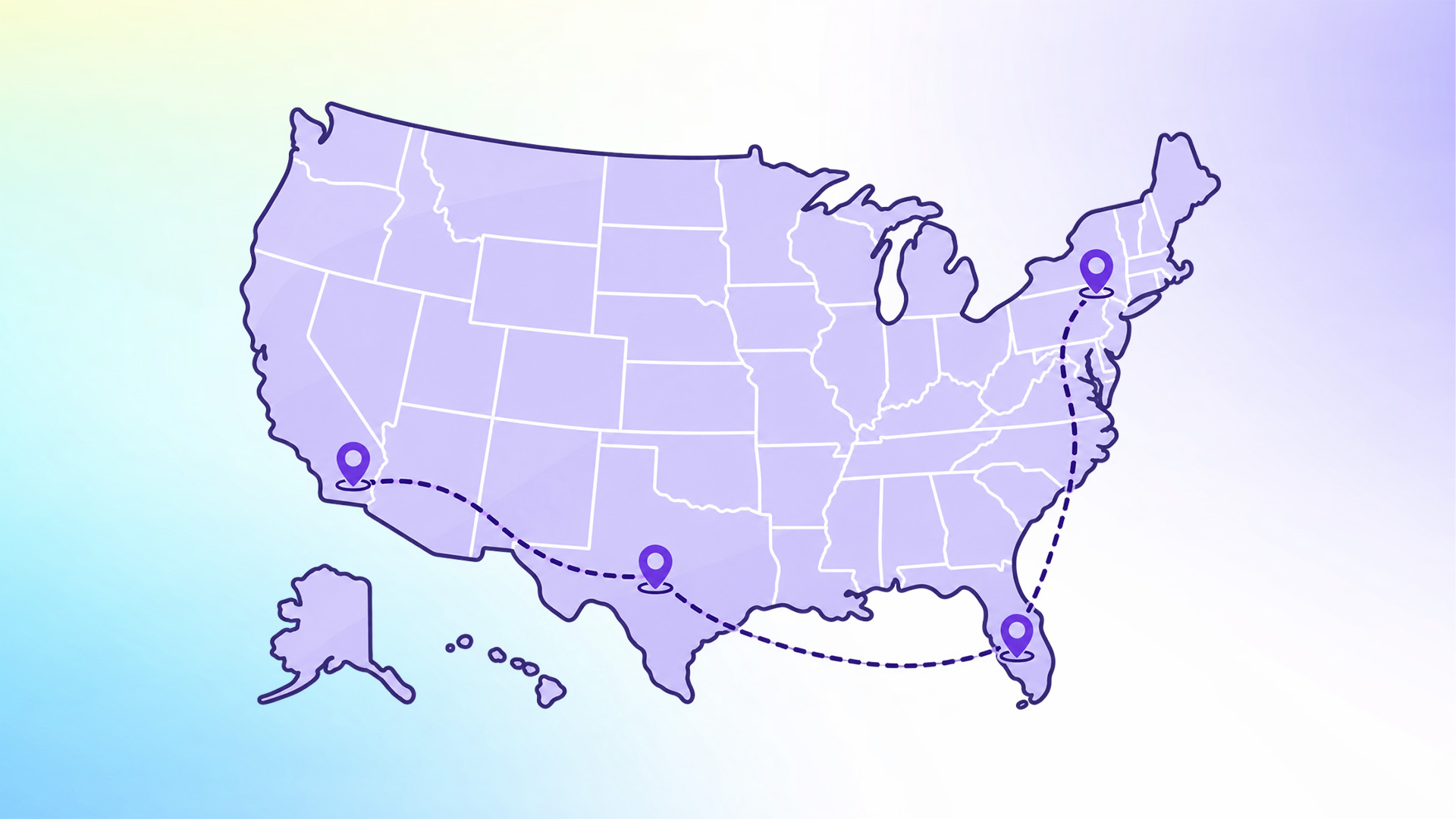
In practice, a telehealth NP serving five states needs five state licenses, five prescriptive authority approvals where required, and five DEA registrations if the role involves controlled substances. Each state board runs its own application process, its own criminal background check requirements, and its own timeline.
Those steps rarely show up in the hiring plan. The search closes, the offer is accepted, and the clinical schedule sits partly empty while licenses work through the queue state by state.
Where Multistate Licensure Slows the Telehealth Nurse Practitioner Hire
Licensure delays in telehealth hiring rarely come from a single step. They come from several state-level requirements stacking on top of each other, each with its own owner, timeline, and fee. Breaking them apart shows where the weeks actually go.
Where the APRN Compact and the Multistate License for Nursing Actually Stand in 2026
A lot of hiring plans assume a compact license covers more ground than it does. Before any licensing work begins, it helps to separate what the Nurse Licensure Compact provides from what nurse practitioners still have to obtain on their own.
- The Nurse Licensure Compact (NLC) allows registered nurses and licensed practical nurses to hold one multistate license issued by their home state and practice in other NLC states. As of July 2026, 43 jurisdictions are fully implemented members, with three more enacted and pending implementation
- Eligibility is tied to the nurse’s primary state of residence. A nurse who lives in a non-compact state can only hold a single state license there, even if they work for a company based in a compact state
- The NLC does not cover advanced practice. An NP who holds a multistate RN license still needs a separate APRN license in every remote state where patients are located at the time of the visit
- The APRN Compact, the interstate agreement built for nurse practitioners, has been enacted by four to five states depending on the source, including Delaware, North Dakota, South Dakota, and Utah. Seven states must enact it before it becomes active, and none have implemented it
- California, one of the largest telehealth markets in the country, participates in neither compact, so every NP serving California patients needs a California license
Until the APRN Compact activates, every state on a telehealth service list is its own licensing project.
The Per-State Sequence: License, Prescriptive Authority, DEA, and Payer Enrollment
Each new state follows a sequence, and most of the steps depend on the one before it. A delay early in the chain pushes every later step back with it.
- NP licensure usually involves two applications in each new state, one for the RN license and one for the APRN license. Licensing firms estimate three weeks to three months per state, depending on the board’s volume and state-specific requirements
- Processing times vary widely across state boards. Washington can issue a permanent license or temporary permit in as little as seven days, New Hampshire typically runs four to six weeks, and California endorsement applicants should plan for up to 12 weeks
- Many states require a separate prescriptive authority application, and restricted practice states add collaborator approval and paperwork that can take six weeks or more
- A separate DEA registration is required for each state where the NP will prescribe controlled substances, and state controlled substance registrations are often required on top of the federal one
- Payer enrollment and credentialing cannot begin until the state license posts. Medicare enrollment alone typically takes 60 to 90 days, which means a license issued in week eight can still leave the NP unable to bill that state’s Medicare patients until month four or five
Run that sequence across five states at once and the gap between a signed offer and a full schedule gets long quickly.
The Cost Line Nobody Budgets: Fees, Staff Time, and Days Before the Telehealth NP Can Bill
Licensing fees are the visible cost, and they are modest one state at a time. The larger cost is the time it takes for the NP to become billable in each state, multiplied by the size of the service footprint.
- DEA registration costs $888 per state for a three-year term. An NP prescribing controlled substances in five states carries $4,440 in DEA fees per cycle before any state controlled substance registrations are added
- State controlled substance registrations range from $75 to $300 in many states, and some states require separate registrations by location
- State APRN license fees vary by board. California, for example, charges $150 for the NP application with a 10 to 12 week processing window, and that comes after the California RN license is already in place
- Applications require transcripts, certification verification, fingerprints, and criminal background checks in each state, and incomplete files are one of the most common sources of delay. Someone has to own that work, whether it is the NP, an internal credentialing team, or a licensing vendor
- Each week an NP is on payroll but licensed in only part of the service list, the schedule carries open capacity in the states still pending. For mental health care and other high-demand telehealth services, that is lost access for patients as well as lost revenue
The fees are easy to add up. The billable delay is the number most digital health teams never put in the hiring budget.
Hiring for Licensure Footprint Instead of Around It
Most telehealth NP searches screen for clinical fit first and sort out licensure after the offer. Flipping that order changes how fast a hire becomes billable. When the service list is mapped before the search opens, licensure becomes a selection criterion instead of a post-hire project.
When to Hire the Multistate License Nurse Practitioner and When to Sponsor New States
With no active APRN Compact, a “multistate license nurse practitioner” in practical terms means an NP who already holds active, unencumbered licenses in several of the states you need. Those candidates exist, but they are a smaller pool, and they know their licenses have value. The decision comes down to whether you pay for that head start in the offer or pay for it in licensing time after the hire.
Two approaches work, and most digital health teams end up using both.
Hire the license when speed to billable matters most.
- The role needs to be seeing patients in specific states within weeks, such as a launch into a new market or coverage for a departing clinician
- The service list includes slow-processing or non-compact states like California, where a new license can take 10 to 12 weeks before credentialing even starts
- The role involves controlled substances, so each missing state also means a missing DEA registration and, in many states, a separate controlled substance registration
- Your credentialing team is already at capacity and cannot absorb several new state applications at once
Sponsor new states when the candidate fits and the timeline allows it.
- The candidate is a strong clinical match and already licensed in one or two of your highest-volume states
- The remaining states on the list process applications quickly, and none require collaborative practice paperwork before the NP can see patients
- Your organization can cover licensing fees and assign someone to manage applications, background checks, and renewals
- Expansion into additional states is planned over the next year, so licenses can be added in phases instead of all at once
A few practices make either approach run smoother.
- Rank the service list by patient demand and license the NP in the top states first, so early billable time goes where volume is highest
- Verify every license through Nursys before the final interview, confirming active status, the issuing state, and any disciplinary action or agreed disposition on record
- Put licensing terms in the offer letter: which states the NP must hold, which ones the company will sponsor, who pays the fees, and the expected timeline for each
- Track renewals, continuing education requirements, and DEA expiration dates by state, since a lapsed license in one state can take that state’s patients off the NP’s schedule overnight
Telehealth NP jobs that spell out licensure expectations upfront also attract a better-fit candidate pool. NPs who already hold licenses in your priority states can see right away that the role suits them, and NPs who would need sponsorship know what support to expect before they apply.
Planning Telehealth Licensure Into the Hiring Timeline
For telehealth NP roles, the hiring timeline has two finish lines. The first is the signed offer. The second is the first billable visit in every state on the service list, and that one can land months later if licensure was left for after the hire.
The steps that create the gap are predictable. An RN and APRN license in each new state, prescriptive authority where required, a DEA registration per state for controlled substances, collaborative paperwork in restricted states, and payer enrollment that cannot start until the license posts. None of it is unusual. It simply needs to sit inside the hiring plan from the start, with dates, owners, and a budget attached.
That planning also needs a check-in point as policy shifts. The APRN Compact is a few states away from activation, and NLC membership keeps growing. Confirming current status with the NCSBN and each state board before finalizing a service list keeps the plan tied to what is true today rather than what is expected soon.
When the search needs NPs who already hold licenses in your priority states, a wider candidate pool helps. NPHire draws from a network of 35,000 NPs across 45 states and puts five interview-ready candidates on the hiring team’s calendar within 30 days, with payment only when a hire is made. A short hiring call is a simple way to talk through which states matter most for the role.
Frequently Asked Questions
1. Is there a multistate license for nurse practitioners in 2026?}
No multistate license for nurse practitioners is active in 2026. The APRN Compact, the interstate agreement designed to create one, has been enacted by four to five states depending on the source, and seven are required before it takes effect. Once it activates, an Interstate Commission will oversee the compact the same way one administers the NLC today. Until then, telehealth NPs need a single state license in every state where they see patients, so employers should stay informed through the NCSBN and individual state boards as more participating jurisdictions sign on.
2. Does a multistate license from the Nurse Licensure Compact cover telehealth NPs?
The NLC pertains only to RN and LPN licenses, so it does not authorize advanced practice in remote states. To be eligible for a multistate RN license, a nurse must meet the compact’s uniform licensure requirements, which include holding an active license in good standing, completing a fingerprint-based background check, having no felony offense on record, and having no misdemeanor offense related to nursing practice that the board finds disqualifying. Nurses must also not be currently enrolled in an alternative program, and graduates of foreign programs whose applicant’s native language is not English must pass an English proficiency exam. An NP who meets all of these still needs separate APRN licenses for each state where they practice as a nurse practitioner.
3. How long does it take a telehealth NP to get licensed in a new state?
Licensing firms estimate three weeks to three months per state, since most states require both an RN and an APRN application. Washington can issue a license in as little as seven days, while California endorsement applicants should plan for up to 12 weeks. Obtaining additional licenses is a time consuming process when several states run at once, and incomplete applications are one of the most common causes of delay. Some boards also require proof of residence, such as a driver’s license, or an in person fingerprinting appointment, which adds scheduling time.
4. Do prescriptive authority and DEA registration transfer between states?
They do not. Many states require a separate prescriptive authority application, and the DEA requires a separate registration for each state where the NP will prescribe controlled substances, at $888 per state for a three-year term. Telehealth NPs diagnose, prescribe, and provide ongoing management for patients remotely, so in behavioral health and urgent care roles, a missing registration in one state can block a core part of the job there. These registrations play a critical role in when the NP can carry a full caseload.
5. Who typically pays for a telehealth nurse practitioner’s additional state licenses?
Practices vary, and the arrangement should be written into the offer letter. Many digital health employers cover the cost of additional licenses, DEA registrations, and renewals for any state the company requires, while candidates who arrive already licensed in priority states may negotiate that value into their compensation. Clear terms on which states are required, which are sponsored, and who handles the paperwork remove a common source of friction after the hire. Offering this support is also one of the more recognized benefits telehealth NPs compare across job offers.
6. How should digital health companies decide which states to license NPs in first?
Start with patient demand. Rank the service list by expected visit volume, then factor in each state’s processing time, practice authority rules, and whether collaborative agreements are required. States with large rural or underserved populations deserve a close look, since telehealth can improve healthcare equity for patients who would otherwise travel far for nursing care. Phasing in additional states over time lets the NP start billing in the highest-priority markets while the remaining applications complete.
7. How does multistate licensure affect when a telehealth NP becomes billable?
Billing in each state depends on the license posting first. Payer enrollment and credentialing cannot begin until then, and Medicare enrollment alone typically takes 60 to 90 days. For patients managing chronic conditions through regular check-ins and remote monitoring, a gap in licensure can also interrupt continuity of care with the same NP. Employers who track licensure, enrollment, and full-time service start dates separately for each state get a much more accurate picture of when a hire reaches full productivity.
8. How do licensure requirements shape the candidate pool for telehealth NP jobs?
Licensure requirements narrow the pool to NPs who either already hold active licenses in the target states or are willing to go through obtaining single state licenses after hire. Postings that list required states, sponsored states, and licensing support help candidates self-select before they apply, and roles built around interdisciplinary care teams should name that too, since many telehealth NPs look for it. Some groups bring unique footprints, such as military spouses, who often hold licenses in several states after relocating. The NLC increases access for RNs across state lines, but public protection rules mean every NP license must still be verified individually.