

.webp)
Ghosting during nurse practitioner recruitment causes qualified nurse practitioner candidates to disengage, delays hiring, and weakens employer credibility across the healthcare industry. When recruiters and hiring managers fail to respond or move slowly, nurse practitioners pursuing the right job shift their job search toward more responsive healthcare organizations, leaving NP roles unfilled longer and increasing staffing pressure on patient care teams.
Why Ghosting Has Become a Problem in Nurse Practitioner Recruiting
Ghosting in nurse practitioner recruitment rarely comes from bad intent. It is usually the result of overloaded systems inside healthcare organizations that are hiring in a high-demand market with limited internal capacity.
Recruiters are often managing multiple NP positions at once, supporting both permanent and temporary placement needs across hospitals, clinics, and office-based practices.
Internal hiring processes also contribute to delays. Job approvals, pay reviews, credentialing steps, and scheduling decisions can take weeks, particularly when hiring managers, directors, or vice presidents are involved.
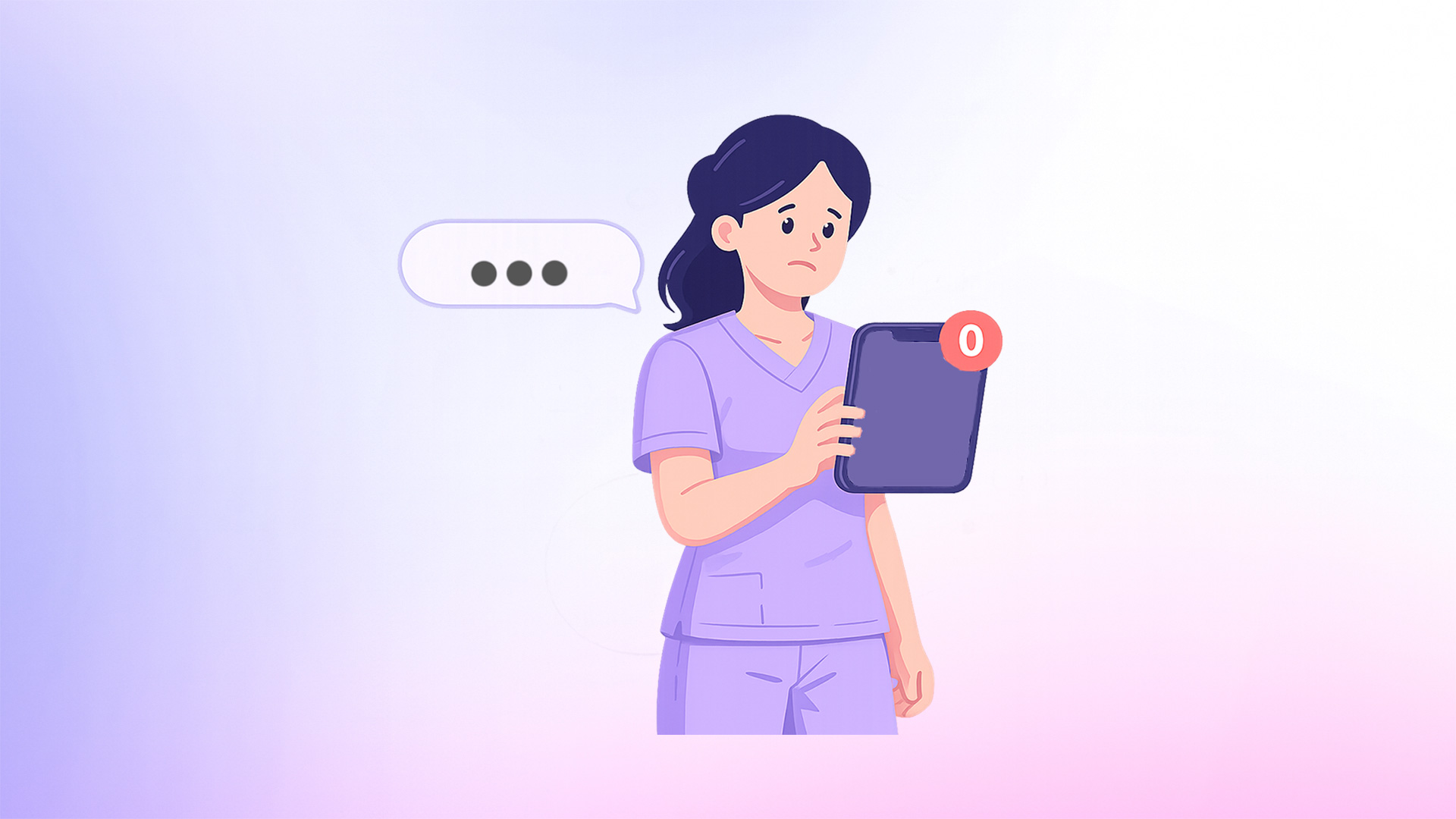
During these waiting periods, communication with nurse practitioner candidates often slows or stops altogether. From the candidate’s perspective, silence feels like disinterest, even when the organization is still actively reviewing the role.
Healthcare staffing adds another layer of complexity. Many nurse practitioner jobs come with unique requirements tied to specialty, training, certifications, and patient care responsibilities.
Recruiters may pause outreach while clarifying details with physicians, managers, or clinical leaders. Without clear response expectations, those pauses quickly turn into missed follow-ups.
The result is a growing gap between employer intent and candidate experience. Nurse practitioners conducting a job search expect timely communication, especially when they are considering new jobs, relocation assistance, or schedule changes. When responses are delayed, candidates shift their focus to other job opportunities, slowing the recruitment process and leaving NP roles open longer than necessary.
What Ghosting Looks Like During Nurse Practitioner Hiring
Ghosting during nurse practitioner hiring rarely happens as a single decision to stop communicating. More often, it appears as repeated lapses at different points in the recruitment process. These breakdowns can happen at any stage and consistently lead nurse practitioner candidates to disengage, even when the employer intends to continue the conversation.
No Response After Application Or Initial Screening
Many nurse practitioners begin their job search by submitting resumes through a job board or directly to a healthcare organization. When there is no confirmation, no acknowledgment, or no follow-up after an initial screening or consultation, candidates assume their application has been dismissed.
This is especially frustrating for qualified candidates who meet the role’s education, certifications, and specialty requirements. Without even a basic response, nurse practitioners quickly shift their attention to other NP jobs where communication is clearer.
Silence After Interviews
Interviews require significant time and preparation, particularly for nurse practitioners who are balancing full patient schedules in primary care, acute care, or specialty practices.
When candidates complete interviews with recruiters, hiring managers, and physicians and then hear nothing, it creates doubt about the organization’s process. Silence after interviews often signals internal disorganization or lack of urgency, prompting candidates to accept other job opportunities before a decision is ever shared.
Delayed Or Vague Feedback
Delayed updates such as “still under review” without timelines or next steps can feel almost as dismissive as no response at all. Nurse practitioner candidates rely on clear feedback to plan their job search, evaluate relocation assistance, and coordinate schedules. V
ague communication slows decision-making and increases the likelihood that candidates disengage, especially when they are considering multiple new jobs at the same time.
Dropped Communication Late In The Process
Ghosting late in the process is often the most damaging. Candidates may receive positive signals about a new position or placement, then experience silence during offer review, credentialing, or schedule discussions.
At this stage, nurse practitioners have already invested time and energy, and dropped communication can permanently damage trust. Even if contact resumes later, many candidates choose not to continue with employers who allowed communication to lapse at a critical moment.
Across each of these stages, ghosting sends a clear message to nurse practitioner candidates, even if unintended. In a competitive market, consistent communication is not just a courtesy. It is a core part of effective nurse practitioner recruitment.
Why Recruiter Silence Drives Nurse Practitioners Away
Recruiter silence carries more weight in nurse practitioner recruitment than many employers realize.
Nurse practitioners are medical professionals with demanding schedules, high responsibility for patient care, and strong employment options. When communication stalls, candidates do not wait indefinitely. They interpret silence as a signal about how the organization operates.
Most nurse practitioner candidates are balancing interviews alongside full clinical workloads and taking time for phone screens, interviews, and follow-up conversations requires real effort. When recruiters fail to respond, candidates feel that their time and expertise are not being respected, which immediately lowers interest in the position.
Silence also creates uncertainty in a fast-moving job market. Nurse practitioners often pursue multiple job opportunities at once, especially when demand is high nationwide.
A delayed response forces candidates to make decisions without complete information. In those moments, they typically move forward with employers who provide clarity, even if the role is not a perfect match.
Recruiter silence also raises concerns about what comes next. If communication is inconsistent during the hiring process, nurse practitioners may assume it will continue after placement.
Questions about support, scheduling, credentialing, and long-term career growth start to surface. For candidates evaluating the right job and the right organization, early communication gaps can outweigh attractive pay, benefits, or relocation assistance.
In nurse practitioner recruitment, responsiveness is often interpreted as a proxy for organizational competence and respect. When recruiters go quiet, candidates rarely complain or push back.
They simply disengage and redirect their job search toward employers who demonstrate clearer communication and stronger follow-through.
The Hidden Cost of Ghosting for Nurse Practitioner Recruitment Teams
Ghosting does not just affect nurse practitioner candidates. It creates measurable costs for recruitment teams and healthcare organizations that are often overlooked until hiring delays become chronic:
- One of the most immediate costs is the loss of qualified candidates.
- Nurse practitioners who disengage rarely announce their decision. They simply stop responding and accept other job opportunities. Recruitment teams then assume the pipeline is thinner than it actually is and restart the search, spending additional time reviewing resumes, sourcing new candidates, and reposting nurse practitioner jobs.
- Ghosting also slows time-to-fill.
- Each missed response stretches the hiring process, especially for NP positions with unique requirements tied to specialty, schedule, or patient population. Delays compound when multiple candidates drop off at different stages, forcing recruiters to move backward instead of forward. Over time, these delays leave NP roles open longer and increase strain on physicians, providers, and existing care teams.
- Employer reputation is another hidden cost.
- Nurse practitioner candidates talk to peers, mentors, and colleagues about their job search experiences. Word spreads quickly within professional networks when communication is poor. Even a small pattern of ghosting can discourage future candidates from engaging with the organization, shrinking the available talent pool.
- Finally, ghosting reduces offer acceptance rates.
- Candidates who experience slow or inconsistent communication often hesitate to commit, even when an offer is extended. Trust has already been weakened, and concerns about support, scheduling, and long-term fit remain unresolved. What starts as a communication gap can ultimately cost recruitment teams both time and credibility.
These costs are rarely tracked on a spreadsheet, but they directly affect hiring outcomes, recruiter workload, and the organization’s ability to fill nurse practitioner positions efficiently.
How Ghosting Slows Recruiting Nurse Practitioners at Scale
Ghosting may seem like an isolated communication issue, but at scale it becomes a structural problem that slows nurse practitioner recruitment across the entire organization. When silence is normalized at any stage of the hiring process, inefficiencies multiply and recruiting momentum breaks down.
- Candidate Drop-Off Forces Constant Restarting
- When nurse practitioner candidates disengage due to lack of response, recruiters are forced to restart searches instead of moving candidates forward. This creates a cycle of repeated sourcing, resume review, and outreach that consumes time and resources. The organization ends up doing the same work multiple times for the same position.
- Sourcing Efforts Become Less Effective Over Time
- As ghosting patterns repeat, fewer nurse practitioners respond to outreach from the same employer. Recruiters may rely more heavily on job boards or broad searches, which often produce lower-quality matches. Over time, this reduces the effectiveness of recruiting nurse practitioners for specialized or high-demand NP roles.
- Recruiter Capacity Shrinks
- Recruiters already managing heavy workloads lose capacity when ghosting creates rework. Time spent chasing stalled candidates or re-opening searches takes away from higher-value tasks such as candidate consultation, hiring manager alignment, and placement strategy. This limits how many positions recruiters can realistically fill at once.
- Hiring Delays Compound Across Teams
- When NP roles remain open longer, pressure shifts to physicians, providers, and existing care teams. Hiring managers become more urgent, schedules tighten, and expectations increase. This urgency often leads to rushed decisions later in the process, increasing the risk of mis-hires and further turnover.
At scale, ghosting becomes a drag on healthcare staffing efficiency, slowing nurse practitioner recruitment and making it harder for organizations to meet demand consistently.
hanges Employers Can Make to Improve Nurse Practitioner Recruitment
Reducing ghosting does not require adding more steps to the hiring process. It requires clearer ownership, better coordination, and simple systems that support consistent communication with nurse practitioner candidates.
- Set Clear Response Expectations
- Healthcare organizations benefit from defining basic response standards for each stage of the recruitment process. This includes acknowledging applications, following up after interviews, and communicating decisions within a reasonable timeframe. Even brief updates help nurse practitioners understand where they stand and keep them engaged in the job search.
- Align Recruiters And Hiring Managers Early
- Many communication gaps happen when recruiters are waiting on feedback from hiring managers or clinical leaders. Aligning early on timelines, interview criteria, and decision authority reduces delays. When managers understand the impact of silence on nurse practitioner recruitment, responses tend to move faster.
- Use Automation For Status Updates
- Automation can support communication without removing the human element. Simple tools that send application confirmations, interview follow-ups, or status updates help nurse practitioner candidates stay informed. This allows recruiters to focus on consultation, placement strategy, and matching candidates to the right job.
- Close The Loop With All Interviewed Candidates
- One of the most effective ways to reduce ghosting is committing to closure. Nurse practitioners who complete interviews should always receive a response, even if they are not selected. This small step improves employer reputation and keeps candidates open to future job opportunities.
- Track Candidate Response As A Recruitment Metric
- Organizations often track time-to-fill and cost-per-hire but overlook response time. Measuring how quickly recruiters respond to nurse practitioner candidates highlights bottlenecks and creates accountability. Over time, this improves both candidate experience and hiring outcomes.
Making these changes strengthens nurse practitioner recruitment by protecting recruiter capacity, improving candidate trust, and reducing the silent drop-offs that slow hiring across the organization.
Why Candidate Experience Shapes the Future of Nurse Practitioner Recruiting
Candidate experience has become a defining factor in nurse practitioner recruitment, especially as demand for nurse practitioners continues to outpace supply across the healthcare industry. How candidates are treated during the hiring process directly influences whether they choose to engage with an organization now or in the future.
Nurse practitioners talk. They share job search experiences with colleagues, former classmates, mentors, and professional networks. When communication is inconsistent or recruiters disappear mid-process, that experience becomes part of the employer’s reputation. Over time, patterns of poor response reduce trust and limit access to qualified nurse practitioner candidates before a job is even posted.
Candidate experience also affects long-term recruitment outcomes. Nurse practitioners who are treated with transparency and respect, even when not selected, are more likely to re-engage for future NP jobs. In contrast, candidates who experience ghosting often avoid the organization entirely, shrinking the talent pool and increasing reliance on repeated sourcing efforts.
As healthcare organizations compete to fill NP positions nationwide, experience matters as much as pay, benefits, or job title. Nurse practitioners evaluate employers based on how clearly they communicate, how well they manage the hiring process, and how consistently they follow through. These signals shape perceptions of support, culture, and professionalism long before a candidate joins the team.
In a market where nurse practitioner recruitment depends on trust and relationships, candidate experience is no longer a soft metric. It is a strategic factor that influences hiring speed, recruiter effectiveness, and an organization’s ability to attract and retain talent over time.
Responsiveness as a Core Nurse Practitioner Hiring Strategy
Ghosting is not just a communication issue. It is a signal to nurse practitioners about how an organization operates, how it values people, and how it manages its hiring process. In a competitive healthcare industry, silence costs more than time. It costs trust, qualified candidates, and momentum.
Nurse practitioner recruitment works best when communication is treated as part of the hiring strategy, not an afterthought. Clear responses, realistic timelines, and consistent follow-up help recruiters protect their time, support hiring managers, and keep qualified nurse practitioner candidates engaged. These small changes compound into faster hiring, stronger pipelines, and better placement outcomes.
As demand for nurse practitioners continues to grow across primary care, acute care, oncology, geriatrics, and specialty roles, employers who prioritize responsiveness will stand out. Organizations that respect candidate time, close the loop, and communicate clearly will fill NP positions faster and build long-term relationships with the talent they need to grow.
Frequently Asked Questions
Why Is Ghosting So Common In Nurse Practitioner Recruitment?
Ghosting often results from overloaded recruiters, slow internal decision-making, and unclear ownership in the hiring process. In many healthcare organizations, recruiters are managing multiple NP positions at once while coordinating with hiring managers, physicians, and leadership, which can delay responses to nurse practitioner candidates.
How Does Ghosting Affect Nurse Practitioner Candidates?
Ghosting creates uncertainty and frustration for nurse practitioners who are actively managing a job search while working full-time in patient care. When candidates receive no response or slow feedback, they often disengage and pursue other nurse practitioner jobs where communication is clearer and faster.
Does Ghosting Really Impact Hiring Outcomes?
Yes. Ghosting directly slows nurse practitioner recruitment by increasing candidate drop-off, extending time-to-fill, and forcing recruiters to restart searches. Over time, it reduces access to qualified candidates and weakens employer credibility in the healthcare industry.
How Quickly Do Nurse Practitioners Expect A Response During Hiring?
Most nurse practitioner candidates expect acknowledgment within a few days and follow-up after interviews within a defined timeframe. Even brief updates help candidates stay engaged and plan their job search, especially when considering new jobs, schedules, or relocation assistance.
Can Ghosting Hurt An Employer’s Reputation?
Absolutely. Nurse practitioners share job search experiences with peers, mentors, and professional networks. Patterns of poor communication can damage employer reputation and make future nurse practitioner recruitment more difficult, even when job opportunities are competitive.
Is Automation Helpful Or Harmful To Candidate Experience?
When used thoughtfully, automation can support nurse practitioner recruitment by providing timely status updates and confirmations. Automated messages should complement, not replace, human communication and allow recruiters to focus on consultation, placement, and candidate matching.
What Role Do Hiring Managers Play In Preventing Ghosting?
Hiring managers play a critical role by providing timely feedback, aligning early on decision timelines, and partnering closely with recruiters. Clear communication between managers and recruiters reduces delays and helps keep nurse practitioner candidates informed throughout the process.
What Is The First Step Employers Can Take To Reduce Ghosting?
The first step is setting clear response expectations across the recruitment process. Defining who communicates with candidates, when updates are sent, and how closure is handled creates accountability and immediately improves nurse practitioner recruitment outcomes.


.webp)