

.webp)
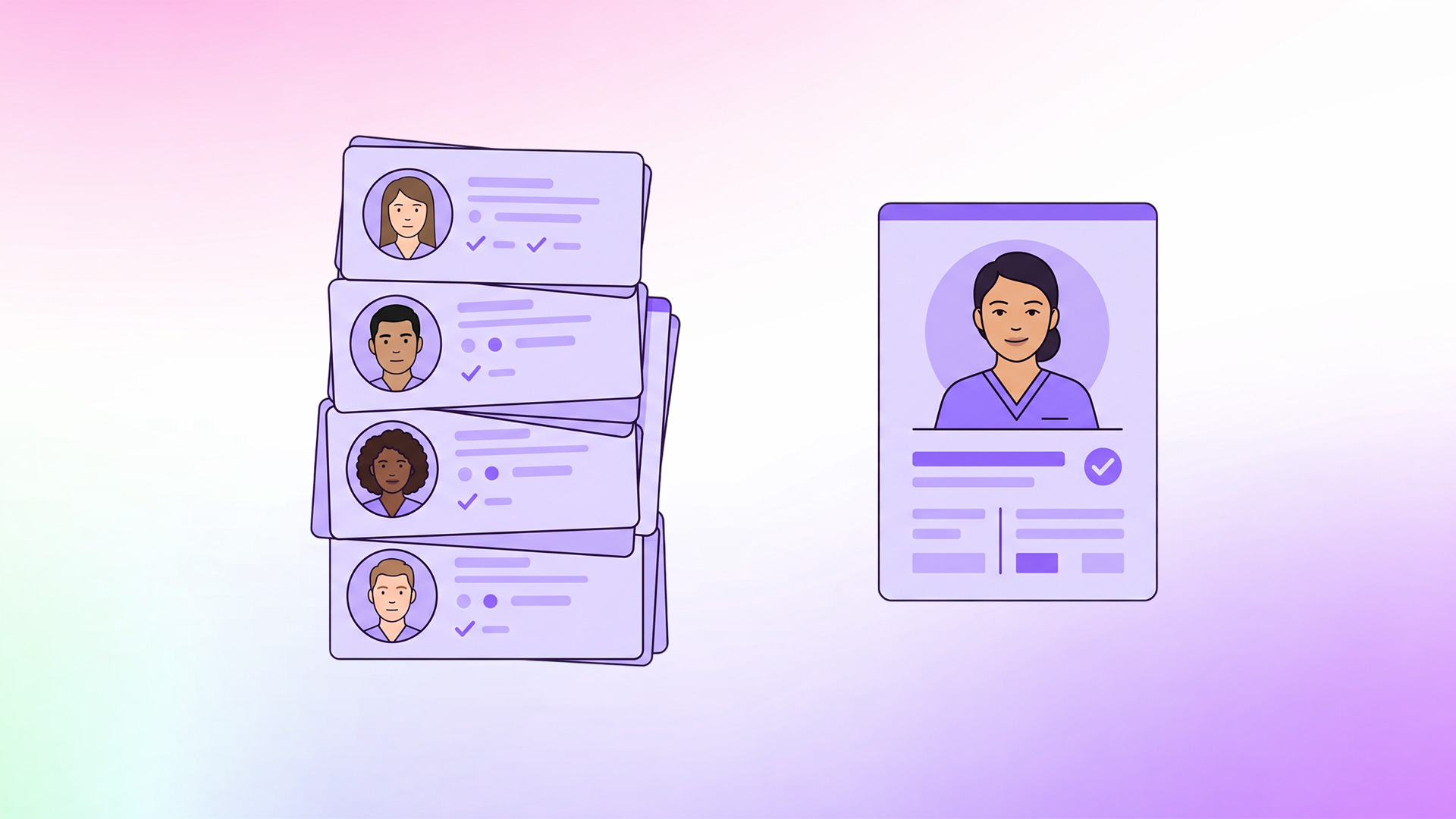
Resume volume does not improve hiring outcomes. Candidate fit does. In healthcare hiring, organizations that prioritize alignment over volume reduce inefficiencies, improve decision-making, and build stronger teams of healthcare professionals. Systems that support tailored job recommendations based on experience, skills, and career goals enable faster, more precise hiring and better long-term performance.
Resume Volume Creates the Illusion of Progress
More resumes coming in feels like momentum in healthcare hiring. More applications, more activity, more movement across the process. On the surface, it looks like the organization is getting closer to filling the position.
The reality is different. Volume increases motion, not clarity. The hiring team spends more time reviewing details, scanning qualifications, and managing candidate flow across systems and platforms. The work expands, but progress slows.
This affects how healthcare professionals evaluate talent. Instead of focusing on which nurse practitioners can actually support patients, collaborate with physicians, and deliver consistent care, the process becomes centered on filtering large pools of job seekers.
It also distorts decision-making. When dozens of profiles look similar on paper, teams rely on surface signals like experience, keywords, or education rather than deeper alignment with the role, the team, and the workplace environment.
High-performing organizations recognize this early. They shift their focus away from volume and toward systems that identify the right candidates faster, improve access to qualified talent, and support better hiring decisions across the organization.
Screening for Volume vs Screening for Fit
Screening becomes a filtering exercise when volume is high.
The hiring team works through stacks of resumes, scanning for keywords, checking qualifications, and trying to narrow down a large pool of job seekers. Time is spent eliminating candidates rather than identifying the right nurse practitioners for the role.
This slows everything down and instead of evaluating how a candidate will support patients, contribute to the team, and deliver high-quality care, the process stays focused on managing input. Even strong candidates can get lost when screening is driven by volume rather than alignment.
It also creates inconsistency. Different reviewers focus on different signals. Some prioritize experience, others focus on education, others on specific skills. Without structure, the process becomes harder to standardize across the organization.
High-performing teams approach screening differently. They define what fit looks like before reviewing a single resume. Clinical expertise, relevant career areas, patient population experience, and alignment with the workplace environment are established upfront. Screening becomes a focused process, not a sorting exercise.
They also reduce unnecessary volume at the source. Instead of opening the funnel as wide as possible, they use targeted sourcing, better data, and smarter systems to identify candidates who already match the role.
The difference is clear. Screening shifts from filtering noise to recognizing signal. Teams move faster, decisions become more consistent, and hiring starts to support long-term performance instead of just filling a position.
Resume Review vs Role Alignment
A strong resume does not always translate to strong performance in the role.
In high-volume healthcare hiring, early decisions are often based on what appears on paper. Years of experience, listed skills, and formal education become the primary filters. Candidates move forward because they look qualified, not because they are aligned.
That gap shows up later. Clinical roles are defined by context. The ability to support patients, manage specific treatment needs, and collaborate with physicians depends on the environment. A nurse practitioner working in acute care operates differently than one in outpatient settings, community clinics, or specialized career areas.
Resumes rarely capture that level of detail, they do not show how a clinician approaches diagnosing, how they communicate with families, or how they function within a team under real operational pressure. They highlight background, not application and this is where misalignment starts.
Candidates may meet the listed qualifications but lack alignment with the actual demands of the position. The mismatch affects onboarding, slows integration, and limits the ability to deliver consistent, high-quality care.
High-performing organizations shift the focus by evaluating candidates in context. How does this person operate in the specific workplace? Can they support this patient population? Do their skills translate into the type of service the organization provides?
They also go beyond static profiles. Structured interviews, scenario-based evaluation, and deeper conversations help uncover how candidates think, act, and respond in real situations.
The difference is practical: resumes show potential. Alignment determines performance.
Too Many Options vs Clear Decisions
When the number of resumes increases, decision-making becomes more difficult, not easier. A larger pool of candidates introduces more comparisons, more variables, and more uncertainty for the hiring team responsible for making the final call.
Each additional profile adds another layer to the evaluation process. Leaders must weigh differences in experience, skills, and clinical expertise, often across candidates who appear similarly qualified on paper. This creates friction in how decisions are made and slows progress toward filling the position.
Over time, this leads to hesitation. Teams revisit earlier candidates, extend interview rounds, and delay final decisions while trying to ensure the right choice is made. The process becomes less about selecting the best-fit nurse practitioner and more about managing uncertainty across too many options.
This dynamic affects consistency as well. Different stakeholders within the organization may prioritize different criteria, making it harder to align on a single direction. Without clear structure, decision-making becomes less predictable and more influenced by subjective judgment.
Decision-making becomes more precise when the process is narrowed to candidates who already match the role. This allows the organization to focus on alignment, not volume, and move forward with greater speed and consistency.
Structured evaluation supports that shift. Clear criteria, aligned expectations, and consistent methods allow teams to compare candidates effectively and move toward a confident hiring decision.
The result is a faster and more reliable process. With fewer, better-aligned options, teams are able to select candidates who can support patients, collaborate with colleagues, and deliver high-quality care without unnecessary delay.
Hiring for Availability vs Hiring for Fit
When a position needs to be filled quickly, availability becomes the primary filter. The focus moves toward which candidates can start soon, complete credentialing, and step into the role with minimal delay. In these moments, alignment with the team, the workplace, and long-term career fit becomes secondary.
That tradeoff shows up later. A nurse practitioner who is available is not always the one best suited to support the specific needs of the practice, the patient population, or the expectations of the organization. Differences in clinical skills, familiarity with certain treatment approaches, or experience across career areas can affect how well that person integrates into the role.
This becomes more visible in real operations. Providers must manage patients, coordinate with physicians, handle documentation, and contribute to a system that depends on collaboration, consistency, and quality. When alignment is off, even small gaps in experience or approach can affect performance.
The process moves differently when the pool is smaller and more intentional. Instead of prioritizing who is immediately available, the hiring team can concentrate on how each candidate will perform in the role, contribute to the team, and support patient care across different locations and service lines.
This also improves how organizations serve their communities. When hiring aligns with real needs, clinicians are better positioned to build relationships with patients, support families, and contribute to improving lives through consistent, high-quality care.
Availability solves short-term gaps. Fit supports long-term performance.
Short-Term Fill vs Long-Term Performance
Filling a position quickly often creates a sense of progress within the organization, especially when the hiring processhas been delayed. A candidate accepts the offer, onboarding begins, and the immediate gap in coverage appears to be resolved.
The long-term impact is less visible at that stage. When hiring decisions are driven by urgency rather than alignment, performance gaps begin to surface over time.
A nurse practitioner may meet the baseline qualifications, but differences in experience, clinical skills, and familiarity with specific treatment workflows can affect how effectively they integrate into the team and contribute to patient care.
These gaps influence onboarding and early performance. Additional training, increased reliance on resources, and extended ramp-up periods place pressure on existing employees and clinical leaders. Teams must provide ongoing support while maintaining daily operations across hospitals, outpatient office settings, and community-based care environments.
The effect extends beyond internal workflows. Patients and their families experience inconsistencies in care delivery, communication, and follow-up. This can affect trust, continuity, and the overall quality of service provided by the organization.
Clarity improves when the candidate pool gets smaller. Fewer, better-aligned candidates make it easier to evaluate long-term fit, assess how a clinician will function within the workplace, and ensure they can contribute meaningfully to the team and the communities they serve.
Organizations that prioritize alignment during healthcare hiring build stronger systems over time. They reduce turnover, improve employee retention, and create an environment where healthcare professionals can grow within their career path, contribute to innovation, and help advance care delivery across the industry.
A fast hire can stabilize operations temporarily, but long-term performance depends on selecting clinicians who are equipped to support the organization’s mission, collaborate effectively with colleagues, and consistently deliver high-quality care.
The Shift: From Resume Volume to Fit-Driven Hiring
Hiring outcomes change when the system is designed around alignment instead of volume. In many cases, healthcare hiring processes are built to capture as many resumes as possible, but this approach increases complexity without improving how well job seekers match the actual needs of the position. The result is a system that generates activity but struggles to consistently identify the right nurse practitioners for the role.
A more effective approach focuses on precision. Organizations that improve hiring performance rely on better use of data, structured process, and modern technology to connect candidates with roles that reflect their real experience, skills, and professional direction. Instead of relying on broad job search behavior across multiple sites or generic listings, they focus on aligning candidates with specific career areas, care settings, and operational needs.
This is where smarter systems create a clear advantage. Platforms that deliver tailored job recommendations based on experience, interests, and clinical qualifications help reduce unnecessary volume while improving match quality. Candidates are guided toward opportunities that reflect their background and goals, rather than navigating large pools of unrelated jobs.
That shift improves the experience for both sides of the hiring process. For the job seeker, the search becomes more relevant and efficient. Candidates can focus on roles that align with their career path, preferred locations, and long-term direction, which makes it easier to identify where they want to join and grow within the healthcare field.
For the organization, the benefits are operational. Hiring teams spend less time managing input and more time evaluating how a candidate will function within the team, collaborate with physicians and nurses, and support the delivery of high-quality care to patients and their families. This improves consistency, reduces friction in the process, and leads to better long-term hiring outcomes.
The impact extends beyond recruitment. When hiring is aligned, organizations are better positioned to serve their community, support employees, and create environments where healthcare professionals can perform at a high level. This contributes to stronger quality, better collaboration, and more reliable performance across the system.
A hiring system built around fit simplifies decision-making and improves speed without sacrificing quality. Organizations that move in this direction reduce noise, strengthen alignment, and build teams that are better equipped to support patients and deliver meaningful impact across the healthcare landscape.
Better Hiring Starts With Better Matching
Hiring performance reflects how well organizations connect the right person to the right position. When healthcare hiring is driven by volume, teams spend more time managing resumes and less time evaluating how candidates will actually contribute to the team, the workplace, and the delivery of patient care.
Shifting toward fit changes outcomes across the system. Organizations that focus on alignment improve how they hire, reduce inefficiencies in the process, and build stronger teams of healthcare professionals who can consistently deliver high-quality care.
This approach also strengthens the candidate experience. Job seekers are able to focus on opportunities that reflect their skills, interests, and long-term career direction, rather than navigating large volumes of unrelated jobs. This leads to better decisions, stronger engagement, and improved integration into the organization.
The impact extends beyond hiring. Better alignment supports employees, improves collaboration with physicians and nurses, and helps organizations create environments where teams can perform at a high level while supporting patients and their families.
Organizations that adopt systems built around tailored job recommendations based on real candidate data, experience, and goals move faster and hire with greater precision. The result is a more efficient hiring model that supports long-term performance, strengthens the community, and improves outcomes across the healthcare landscape.
FAQs
1. Does more resume volume improve healthcare hiring outcomes?
Higher resume volume does not guarantee better results in healthcare hiring. Large pools of candidates often increase complexity, slow the process, and make it harder for hiring teams to identify nurse practitioners who align with the needs of the position and the organization.
2. Why is candidate fit important when hiring nurse practitioners?
Candidate fit ensures that nurse practitioners can effectively support patients, collaborate with physicians, and contribute to the team. Alignment with the workplace, skills, and clinical experience improves performance and long-term success.
3. How can healthcare organizations improve hiring efficiency?
Organizations can improve efficiency by using structured evaluation, better data, and systems that support tailored job recommendations based on candidate experience and interests. This reduces unnecessary volume and improves match quality.
4. What are the risks of hiring based on availability instead of fit?
Hiring based on availability can lead to misalignment in skills, experience, and career goals. This affects onboarding, increases turnover, and impacts the ability to deliver consistent, high-quality patient care.
5. How does poor candidate fit affect patient care?
Poor fit can lead to inconsistencies in treatment, communication challenges, and reduced coordination across the team. This impacts both patients and their families, especially in complex care environments.
6. What role does technology play in improving hiring outcomes?
Modern technology helps organizations use data to better match candidates with roles. Systems that support tailored job recommendations based on qualifications and experience improve alignment and reduce hiring inefficiencies.
7. How can job seekers benefit from fit-driven hiring systems?
Job seekers benefit from more relevant opportunities, clearer career paths, and better alignment with their interests and skills. This improves decision-making and long-term satisfaction in their career.
8. What defines a strong hiring process in healthcare?
A strong hiring process focuses on alignment, structured evaluation, and efficient use of resources. It connects the right candidates to the right roles, supports the team, and ensures consistent, high-quality care delivery.


.webp)